

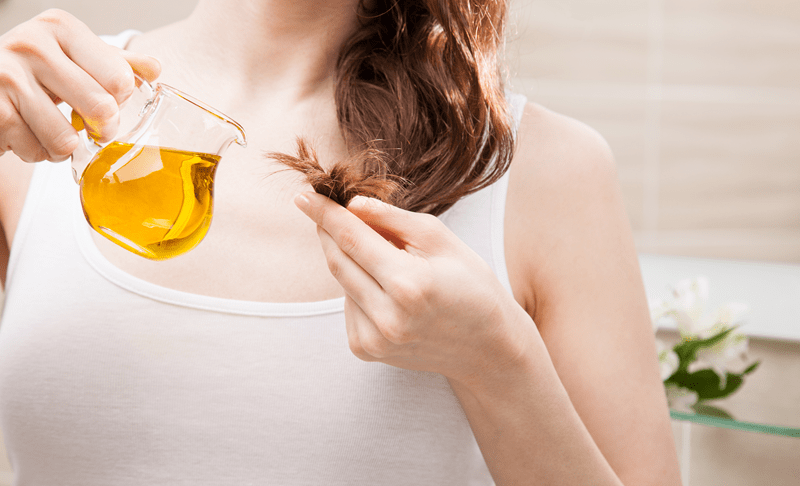
With the hair oils that offer the most shine and repair, it can be a bit intimidating to make the right choice when all the products seem to promise healthier and shinier hair. But the truth is that an oil depends on the type of your hair, your objectives, and the manner of your application.
Even with a simple drop guide, it will be very convenient to build a routine that naturally makes your hair firmer and shinier.
Not every hair oil is effective in the same way. Some put a thin layer of hair for daily shine, while others deeply nourish the hair that is damaged. Knowing these types will help you decide what your hair really needs.
Very light oils such as jojoba, grapeseed, and almond oil are quickly absorbed and are good for fine hair. They do not weigh the hair but give it a glossy look. A medium-weight oil, mainly argan oil, allows a user to remove frizz, be resistant to heat, and, on the spot, make the hair soft. Heavier ones, such as coconut or castor oil, can be used for the repair of hair and the retention of moisture.
If your hair is looking dull and lifeless, argan oil is the one that can give it a new life, brightening it instantly. Curls that are dry or can even become brittle if the only solution is feeding with coconut or avocado oil due to their deep moisturizing property. For frizz, almond and argan oils provide the effect of smoothness.
When your scalp is dry and itchy, jojoba, and especially certain types of drops for the scalp, can bring back the normalcy. If breakage is what worries you the most, then castor oil could be very helpful in making your hair strong.
The argan vs jojoba comparison gets much clearer at this point: argan is the one that focuses on making the hair shiny, while jojoba is the one that provides scalp stability and regulates moisture.
A treatment left on the hair overnight is the best way to help with the renewal of extremely dry or damaged hair. Putting the oil on hair for a longer period lets it go deep and delivers its nutrients that make the hair soft and shiny.
Usually, people who resort to overnight methods are those whose hair is rough, brittle, or has been damaged by coloring or the use of hot styling tools. The oil should be warmed a bit before putting it on to allow for better absorption.
After the application of the oil on the middle parts and ends of the hair, you can loosely braid your hair so it won't get tangled while you are sleeping. The next morning, when you wash it, you will have hair that is not only smooth but easy to work with as well.
Putting too much oil on the hair can be the reason for the hair to lose its volume. A very easy drop guide will keep you from having roots that are too oily, and at the same time, it will let you have the shine and repair benefits that you desire.
Based on the length of your hair, you should follow this drop guide:
By using the proper amount, the hair oils will be able to distribute smoothly and without heaviness into your hair.
You may like to customize your ritual, and carrier mixes would be perfect for that, helping you create targeted treatments. Carrier oils like almond, jojoba, coconut, and grapeseed all have different qualities. By blending them together, you can remedy several problems at the same time.
For shine, the most common mixture is argan and almond oil. To repair, combine castor oil with coconut oil to help the weakened strands become stronger. Jojoba mixed with grapeseed is perfect for sensitive scalps or those that are prone to dandruff. Carrier blends are great ways for essential oils to be diluted as well, so that the scalp is kept comfortable and safe.
Scalp drops are super light serums specially made to make the roots, and not just the lengths, healthy again. Drops calm down scabs, heat, and bring in new, sturdy hairs.
The applications of this drop include scalp areas with dry skin, dandruff, and those that are out of balance. Quite a lot of them feature jojoba or aloe-based materials since these come in handy with natural scalp oil and make the area comfortable. Besides, they can convert carrier mixes to your average style for root and length hydration, thus, total mending.
The argument between argan and jojoba has been ongoing, debating which oil is more suitable for specific uses. If you are looking for frizz control, shine, and smoothness, go for argan as it is thicker and richer. It is suitable for medium to thick hair types or anyone who styles with heat.
Jojoba is lighter and more similar to the scalp’s natural sebum. That is why it is a perfect solution for people with scalp imbalances, having light dryness, or oily roots. The oil can be used without the strands being clumped, and this is a good everyday oil.
Before deciding on any product, check the following:
By putting all these points together, you get an adequate dosage of hair oil that really nurtures your hair.
Even the most expensive oil cannot work if the user makes mistakes in operation. Make sure you do not fall into these traps:
Once these mishaps are eliminated, your glow and repair routine will work better.
The most effective hair oils for shine and repair depend on the understanding of hair needs and the right oil selection for the set goals. Light oils are ideal for revealing the natural shine of hair every day, whereas heavier oils can still penetrate the hair with deep nourishment.
In case it is handled properly, your haircare regimen will turn into a less complicated one, more efficient, and a lot more pleasurable than it used to be.
Usually, people will benefit from 2-3 times a week application of an oil, which is also dependent on the dryness and thickness of the hair.
Definitely, scalp drops are for the roots, and hair oils are for the lengths of the hair.
Overnight treatments are almost perfect for all hair types; however, fine hair may require a smaller amount of oil to avoid heaviness.
Jojoba is good for daily use because it is not heavy, while argan is great for better shine and frizz control.
This content was created by AI