

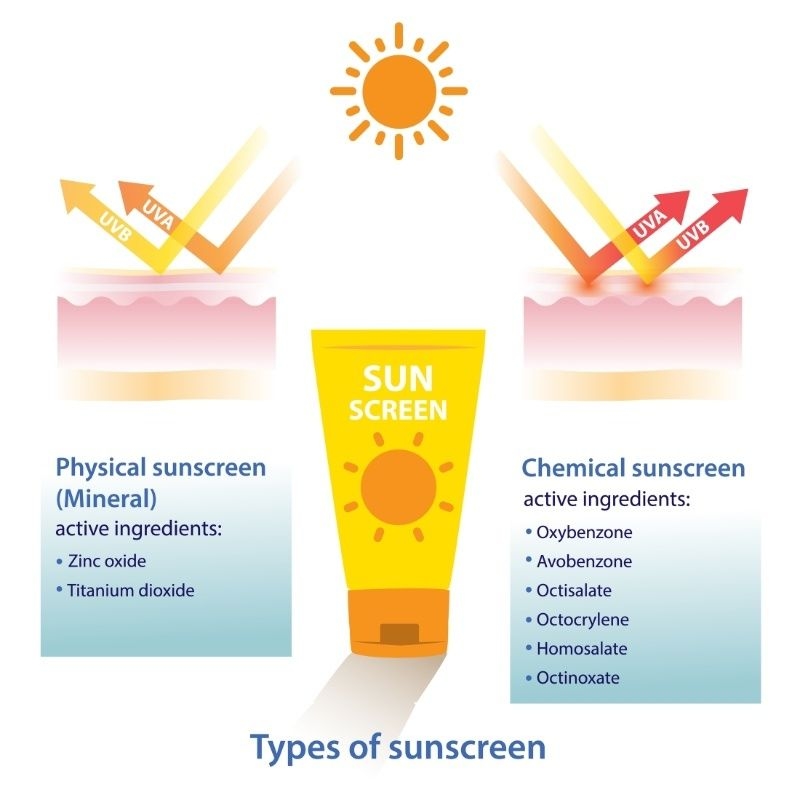
Mineral vs Chemical sunscreen is a hot topic in skincare these days. Both help protect your skin from UV rays, but in very different ways, and they also have different effects on your skin. Choosing the right sunscreen is important because everyday exposure to UV rays can age your skin prematurely and cause sunspots and sunburn. You have to learn to apply both sunscreens in your everyday skincare routine.
The largest differences when deciding between mineral vs. chemical sunscreens are how they both work. Mineral sunscreens stay on the top of the surface of the skin and repel UV rays, whereas chemical ones actually absorb into the surface and convert the UV rays to heat before they are released by the body. Both formulas can achieve protection if applied correctly and consistently.
Many consumers looking for the best sunscreen for skin prefer a lightweight and non-pore-clogging sunscreen and one that also wears well under makeup, whereas others prefer something that calms redness and that won't hurt sensitive skin. Understanding how each of them works helps consumers decide what would best be applied in their everyday routine.
Mineral sunscreens have a combination of zinc oxide and/or titanium dioxide as the primary active ingredients. When applied to the skin, they create a physical barrier that blocks both UVA and UVB rays. Unlike chemical sunscreen products, which have to be applied a few minutes before being exposed to the sun, mineral products can be applied directly before you are exposed and begin working right away.
Many people have sensitive skin and are always looking for a good sensitive skin sunscreen product. Many mineral sunscreens have a gentle effect on skin, making them a favorite for those who have sensitive skin. People who suffer from rosacea, eczema, and acne often prefer the use of mineral sunscreen. This may be because of how calming it can be on the skin barrier, and it tends not to cause irritation. The feel and texture of mineral sunscreen have greatly improved over time.
This sunscreen uses a combination of active ingredients such as octinoxate, octisalate, avobenzone, and more to absorb UV rays into the surface of the skin and then convert them into heat. These ingredients then release the heat into the skin and prevent skin damage. These sunscreen types tend to be lighter and spread more evenly over the face and body.
Many users opt for the use of chemical ones because they are invisible and wear nicely under foundation. Oily skin types find them useful because they are less greasy. They do sometimes sting when applied to or near the eye area because they include chemical irritants.
For those with sensitive skin, mineral sunscreen tends to be more highly recommended than chemical ones because of how naturally calming it is for skin that has been burned or if the skin is very red from irritation. Sensitive skin sunscreens are also great because the formulas are meant to decrease burning sensations that can occur with some SPF.
Mineral sunscreen formulas may not feel ideal for all users; they may feel dry and thick depending on the formula and the skin type of the user. The right sunscreen for your skin is one that you like the way it feels on your skin and that also performs as it needs to protect you from the sun.
Many people avoid wearing sunscreen because of the texture; many sunscreen formulas can feel thick and gooey. Many mineral sunscreens can feel thick; however, they have a matte feel on the skin, which can also work for oily skin types. Many chemical formulas feel lighter and blend smoothly.
The formulas have been changed over time, with some fluid mineral formulas and a lot of moisturizing chemical formulas. Experimenting with many different finishes is recommended to find one that you love.
It is true that the only way to ensure a sunscreen product will actually protect your skin is to wear sunscreen regularly, and many people just don't wear enough to truly get the benefits from the SPF rating on the product. They simply don't apply enough of the product onto the skin. The recommended daily sunscreen use SPF rating is 30 or higher. Dermatologists recommend you use about two fingers' worth of sunscreen per part of the face you apply it to.
It's important to take this advice because otherwise you will not be receiving the SPF that is listed on the product. Reapplication must occur every 2 hours, especially if swimming or if sweating a lot. Even high-grade SPF skincare products become less effective if you do not apply them again, because skin is constantly turning over cells.
Many people who use mineral sunscreen are aware that a lot of chemical sunscreens have harmful chemicals in them that could harm the coral reefs; for this reason, many sunscreen brands now carry reef-safe sunscreen products. Many mineral sunscreens are considered to be "clean" sunscreens due to their simpler ingredients. Marketers and those producing sunscreen know that the consumer has power and has come out with the best sunscreen for skin for that reason.
The decision of mineral vs chemical sunscreen depends solely on the skin type you have, how often you go outdoors, and how the sunscreen feels on your skin. If you find that your skin tends to be a bit more sensitive, then mineral sunscreen may be the perfect choice for you. For people with skin problems such as acne or sensitive skin, sunscreen tends to work very well.
If you want a light-feeling sunscreen that rubs in quickly, you will enjoy chemical sunscreens a lot. Oily skin types benefit from products that are lighter feeling, whereas dry skin may prefer more hydrating formulas. The best sunscreen for skin will allow you to comfortably use it daily.
The mineral vs chemical sunscreen discussion can go on forever, but ultimately, there is no answer, as each type works differently on each person's skin. Mineral sunscreen products may be a bit better for skin that is easily irritated and feels the best to some individuals.
Chemical sunscreen products offer a light texture that wears nicely on a daily basis, especially when wearing makeup underneath. Both products should be applied evenly, used in ample amounts, and reapplied often in order to protect your skin effectively.
Sunscreen can potentially clog pores, especially if the sunscreen formula is too rich for your skin type. Opt for non-comedogenic SPF skincare products. Lightweight mineral sunscreens, in general, are better options for acne-prone skin. Oil-free and gel-based chemical sunscreens are also more suitable.
Yes! UV rays are always active and can even reflect from snow, increasing your skin's exposure, and therefore, damage and premature aging of the skin may occur if you choose to forego sun protection.
While sun-protective makeup does have a UV-protecting component, it's not generally sufficient on its own, as people rarely wear their foundation or tinted moisturizers thick enough to gain the level of SPF on the product's package.
The majority of SPFs will last about two hours on skin before you need to reapply. Sunscreens' effectiveness may wear off even more quickly when swimming, sweating, or in hot and sunny conditions.
This content was created by AI